


There is no single safe cleaning chemical or pressure setting for every facade. Glass, aluminium, ACP, painted surfaces, concrete, stone and metal panels react differently to cleaners, abrasion, heat and water. Identify the material, inspect its condition and test a small area before approving full-scale work.
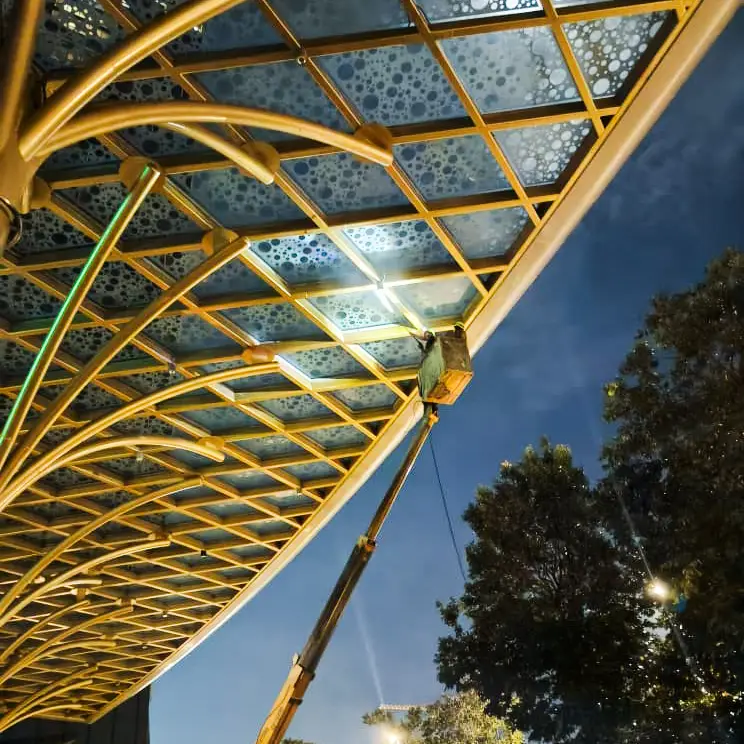
This building facade cleaning methods Malaysia guide helps property teams compare material-specific approaches and ask better questions before facade cleaning begins.
Building Facade Cleaning Methods Malaysia Material Table
| Material | Common contamination | Suitable starting approach | Main risk |
|---|---|---|---|
| Glass | Dust, traffic film, water spots, construction residue | Water, suitable detergent, non-scratching tools and controlled detailing | Scratching, coating damage and residue at frames |
| Aluminium | Oxidation, pollution, streaks and sealant residue | Mild compatible cleaner, soft agitation and thorough rinsing after testing | Staining, colour change and damage to anodised or coated finishes |
| ACP | Dust, rain trails, algae and traffic film | Low-pressure washing with a compatible neutral cleaner and soft tools | Denting, coating damage, water entry at joints and gloss variation |
| Concrete | Algae, soot, efflorescence and general soiling | Condition assessment followed by controlled water, brushing or a specified treatment | Surface erosion, opened cracks and uneven appearance |
| Painted surfaces | Chalking, algae, dirt and runoff stains | Gentle washing after adhesion and coating-condition checks | Lifting weak paint or creating patchy colour |
| Stone | Biological growth, atmospheric dirt, salts and staining | Stone-specific testing and the least aggressive effective method | Etching, salt movement, discolouration and joint damage |
| Metal panels | Pollution, corrosion products, grease and deposits | Finish-compatible cleaning with corrosion recorded separately | Accelerating corrosion or marking protective coatings |
Begin with Material Identification
From the ground, coated aluminium, ACP and painted steel can appear similar. Concrete may carry a thin decorative coating, and glass may have an exposed film or specialist surface. Obtain facade drawings, warranties and manufacturer information where available. If records are incomplete, inspect closely before selecting a method.
Building facade cleaning methods Malaysia contractors propose should also respond to condition. Loose coating, open joints, cracked sealant, corroded fixings and damaged stone may need repair or protection before washing.
Identify the Contamination, Not Just the Colour
Black marks may be soot, biological growth, sealant migration or residue trapped by water. White deposits may be mineral scale, efflorescence or cleaning residue. The cause changes the solution. Applying a stronger product without diagnosis can set a stain, attack the finish or move contamination into adjacent joints.
Seven Checks Before Full-Scale Cleaning
- Confirm the facade material and finish.
- Map cracks, loose components, failed joints and water entry risk.
- Identify likely contamination and its distribution.
- Review manufacturer restrictions and warranty conditions.
- Test the proposed product, concentration, dwell time and agitation.
- Check rinsing, runoff collection and effects on lower elevations.
- Agree on an acceptable sample result before expanding the work.
Pressure Is a Tool, Not a Universal Answer
High pressure can remove dirt quickly, but it can also force water through joints, lift weak paint, erode concrete or damage seals. Use the lowest effective pressure and maintain an appropriate distance and angle. Some surfaces are better cleaned with soft agitation, controlled chemical dwell or low-pressure rinsing.
Plan the Sequence from Top to Bottom
Runoff from an upper work zone can mark clean areas below. Break large elevations into manageable sections, control product drying and rinse consistently. Wind, sun and surface temperature affect dwell time, so the same sequence may not work on every side of the building.
Access planning is part of quality. Rope access, gondolas, platforms and ground-based tools each affect reach, water control and the ability to inspect details. Review the rope access versus scaffolding comparison when access options are still being considered.
Elevated cleaning also needs site-specific safety controls. The Department of Occupational Safety and Health publishes Malaysian work-at-height resources relevant to planning access and protecting people below.
Record Defects Discovered During Cleaning
Close access can reveal failed sealant, open joints, corrosion, loose trim, cracked glazing or damaged coatings. Stop and report anything that could make continued cleaning unsafe or worsen the defect. Photographs should show both a close view and its location on the elevation.
Do Not Promise a Brand-New Finish
Cleaning removes suitable contamination; it does not reverse fading, oxidation, scratches, coating failure or material ageing. The trial panel should establish the realistic result. If appearance remains uneven after safe cleaning, the building may need restoration, recoating or replacement advice.
Frequently Asked Questions
Can one detergent clean every facade material?
No. Compatibility depends on the material, finish, contamination, concentration, dwell time and rinsing. Test the proposed system before full use.
Is pressure washing safe for ACP?
It can be used only with appropriate pressure, distance and joint awareness. Excessive pressure may mark coatings, dent panels or drive water through interfaces.
Can facade cleaning remove oxidation?
Routine cleaning may remove surface dirt but not reverse material or coating deterioration. Oxidation treatment or restoration needs a separate assessment and sample.
Why is a test patch important?
It confirms compatibility, cleaning effectiveness, finish change and the realistic visual result before a large elevation is exposed.
Should cracks be cleaned before repair?
The repair specification determines preparation. Defects should first be recorded and assessed so cleaning does not enlarge them or introduce water.
Request a Site Assessment
Vertical Pro Sdn Bhd provides high-rise facade cleaning for suitable glass, panel and finished exterior surfaces. A trial area helps confirm building facade cleaning methods Malaysia properties can use without assuming one product suits every material. Review Vertical Pro’s external facade cleaning or contact the team to discuss the building, access constraints and intended outcome.
Prepared by Vertical Pro Sdn Bhd for building owners, facility managers, property managers, JMB and MC committees. This article provides general building-maintenance information. The final method, access system and repair or cleaning specification should be confirmed for the actual building and site conditions.