


Written by Vertical Pro Sdn Bhd.
Reading Time: 8 minutesFacade maintenance Malaysia programmes should connect routine observation, planned inspection, cleaning, sealant review, water-leak investigation and prioritised repair. Cleaning alone is not a complete maintenance plan, and inspection without follow-up does not improve the building.
The quick answer for building managers: keep one condition register, set monthly, quarterly and annual checks, assign responsibilities, and adapt the schedule to the façade materials, exposure, defects and building operations.
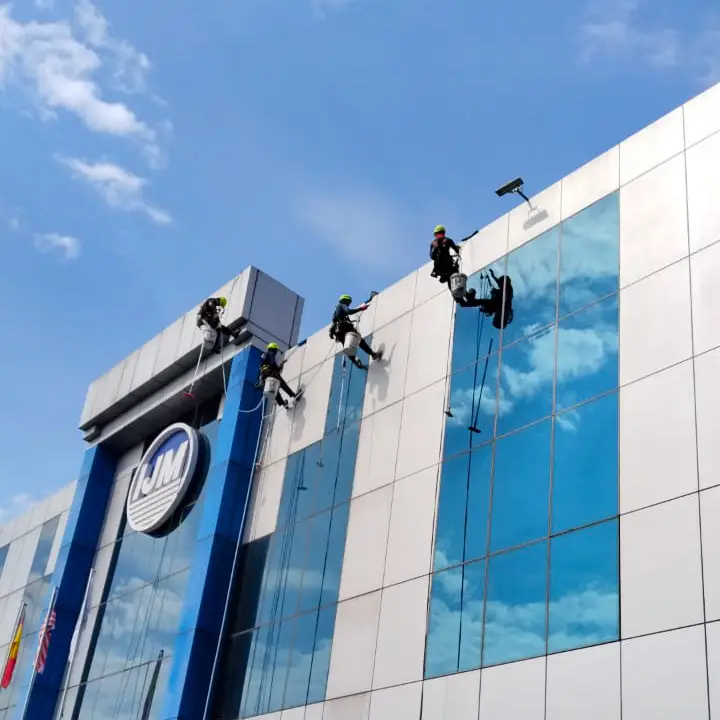
What Is Facade Maintenance?
Facade maintenance is the planned care of a building’s external envelope and attached features. It may include visual checks, close inspection, cleaning, sealant and joint work, coating repairs, waterproofing, glazing maintenance, corrosion treatment and replacement of damaged components.
A facade maintenance Malaysia plan should distinguish routine upkeep from specialist investigation and repair. A cleaner may report a loose-looking panel, but assessment and repair of that condition require the appropriate scope and qualified personnel.
Why Malaysian Buildings Need a Condition-Based Plan
Rain, humidity, sunlight, traffic pollution, wind, coastal exposure, organic growth and nearby construction affect façades differently. Shaded areas may develop algae; road-facing glass may collect oily film; joints exposed to movement and ultraviolet light may age differently from sheltered joints.
Location alone does not set the interval. Material, age, design, workmanship, previous repair, occupancy and actual condition also matter. The schedule should become more precise as the building builds a history of defects and completed work.
What a Facade Maintenance Programme Can Include
| Activity | Purpose | Typical output |
|---|---|---|
| Routine observation | Notice visible change from safe occupied or ground areas | Photograph and location note |
| Close inspection | Review difficult-access materials, joints and fixtures | Coverage map, defect register and priorities |
| Facade cleaning | Remove agreed contamination and improve visibility of surfaces | Cleaned zones, test result and defect observations |
| Sealant or waterproofing work | Address defined failed joints or water-entry paths | Material records, preparation, completed quantities and quality checks |
| Coating or paint repair | Treat approved deterioration and restore protection | Prepared areas, product system and finish record |
| Glazing or component repair | Correct damaged or loose elements | Specialist scope, replacement details and acceptance |
Not every building needs every activity each year. The condition register and risk review should guide scope and priority.
12 Smart, Essential Planning Checks
1. Build a façade asset register
Record blocks, elevations, material types, glazing systems, sealant joints, coatings, panels, louvres, signage, canopies and other external fixtures. Add available drawings, warranties, manuals and previous repair information.
A facade maintenance Malaysia team cannot manage condition well if every report uses a different name for the same elevation. Agree on location labels from the start.
2. Establish a baseline condition
Use photographs and a structured inspection to record the starting condition. Note cracks, failed sealant, staining, corrosion, loose-looking fixtures, peeling coatings, water marks and inaccessible areas without making conclusions beyond the evidence.
The baseline lets future inspections compare change rather than relying on memory. Use consistent viewpoints and location codes where possible.
3. Separate symptoms from possible causes
A stain is a symptom, not a diagnosis. Water marks may relate to a failed joint, drainage path, crack, flashing or another interface. Algae may show long-term moisture but not identify the entry route.
The facade maintenance Malaysia workflow should move from symptom to inspection, then to an evidence-based repair scope. Repainting over a recurring water mark may hide it temporarily without addressing the cause.
4. Set inspection frequencies by condition
Routine visual checks, detailed close inspections and post-weather reviews serve different purposes. A new stable elevation may follow the planned cycle, while a deteriorating joint or frequently disturbed sign may need earlier review.
Document why an interval changes. This helps JMB, MC, facility and property-management teams explain priorities and budget.
5. Choose access for the task
Ground observation, drones, water-fed poles, mobile platforms, gondolas, scaffold and rope access services provide different coverage and work positions. Inspection, cleaning and repair may need different access even on the same elevation.
A facade maintenance Malaysia proposal should explain anchor or ground conditions, reach, rescue, public protection and how every included area will be accessed.
6. Test materials and repair methods
Cleaning products, coatings, sealants and repair materials should suit the substrate, existing system and exposure. Use representative tests or mock-ups where the result, adhesion, colour or compatibility is uncertain.
Record preparation, product, batch or relevant material information, weather, curing and acceptance. A product name without surface preparation does not describe the completed repair.
7. Coordinate cleaning with inspection
Cleaning can reveal cracks, joint edges and coating condition that dirt was hiding. Where practical, define what technicians should photograph during cleaning and which findings require escalation.
The facade maintenance Malaysia plan should still separate a cleaning observation from a detailed technical inspection. Coverage, competency and reporting may differ.
8. Plan water-leak investigation carefully
Record where water appears inside, the weather conditions, affected elevation, nearby joints and previous repairs. A controlled investigation may need inspection of interfaces, drainage and sealants before any water test or repair.
Avoid promising that one visible crack or bead of sealant is the full cause without evidence. Complex leaks can involve several paths.
9. Prioritise defects consistently
Use a defined system that considers apparent urgency, exposure, likelihood of further damage, impact on occupants and need for specialist review. Potentially loose components or active water near electrical systems justify prompt escalation.
The maintenance team should avoid making structural claims without the appropriate investigation. “Visible crack requiring specialist review” is more defensible than an unsupported diagnosis.
10. Protect people and building operations
Exterior work may affect entrances, roads, tenant windows, balconies, air intakes, landscaping and equipment. Plan barriers, notices, permits, escorts, working hours, water control and tool security.
Malaysia’s Department of Occupational Safety and Health provides guidance on preventing falls at workplaces. Site controls should match the selected access and actual exposure.
11. Keep one defect and repair register
For each item, record the location, date, photograph, description, priority, responsible party, target action, completed work and next review. Link repair records to the original observation.
A facade maintenance Malaysia register becomes more useful over time. It can show recurring leaks, frequently repaired joints and elevations that soil or deteriorate faster.
12. Review the plan every year
Compare planned work with completed work, new defects, tenant reports, costs and upcoming projects. Adjust intervals and budget based on evidence. A maintenance plan should change as the building changes.
Carry forward incomplete high-priority actions with named responsibility and a review date rather than allowing them to disappear into the next annual budget.
Practical Monthly, Quarterly and Annual Schedule
| Frequency | Suggested activity | Record |
|---|---|---|
| Monthly | Ground or occupied-area visual check for obvious defects, drainage issues, external fixtures and new water marks | Dated photographs and new defect entries |
| Quarterly | Review sealant and window concerns, staining, tenant reports and areas affected by nearby work | Condition update and priority changes |
| After severe weather or incident | Check exposed fixtures, panels, signs, drainage and previously vulnerable areas from safe positions | Event-specific observation record |
| Annually | Review detailed façade assessment, cleaning needs, waterproofing, difficult-access areas and repair backlog | Annual plan, budget and approved work packages |
This is a starting framework. Building design, condition, manufacturer guidance and professional advice may require different intervals.
Symptom, Possible Cause and Next Step
| Visible symptom | Possible cause | Useful next step |
|---|---|---|
| Water mark below window | Perimeter sealant, drainage, flashing or another interface | Map occurrence and inspect adjacent joints and paths |
| Cracked or separated sealant | Ageing, movement, poor adhesion or substrate condition | Assess joint design, substrate and extent before replacement |
| Rust streak | Corroding metal fixing or component above | Trace the source and assess the component |
| Peeling paint | Moisture, preparation, coating age or substrate movement | Check moisture and substrate before repainting |
| Recurring algae | Shade, moisture retention or runoff pattern | Review water path and compatible cleaning treatment |
| Loose-looking panel or fixture | Fixing or component movement | Establish exclusion and obtain prompt specialist assessment |
Possible causes are not diagnoses. The actual repair follows inspection and evidence.
From Inspection to Completed Repair
- Observe: record the symptom, location, date and context.
- Inspect: define coverage, access and the information needed to understand the condition.
- Prioritise: assign urgency and any temporary controls.
- Specify: state preparation, material, access, testing and acceptance requirements.
- Approve: compare scope, method, competency, programme and cost.
- Execute: complete work with site controls and daily records.
- Inspect the result: verify completed quantities and agreed quality checks.
- Close and monitor: update the register and schedule the next review.
Budgeting by Priority, Not Guesswork
Separate routine recurring costs from investigation, planned renewal and urgent repair. Cleaning, annual inspection and small sealant repairs may sit in different work packages even when one access mobilisation can support more than one task.
A facade maintenance Malaysia budget should show assumptions, quantities, access, contingency and items awaiting further investigation. This lets decision-makers understand what can be approved now and what information is still missing.
Questions to Ask a Facade Maintenance Contractor
- Which elevations, materials and defects are included?
- What inspection evidence supports the proposed repair?
- Which access system and public controls will be used?
- How will products be selected and tested?
- What surface preparation and weather limits apply?
- How will completed work and materials be recorded?
- Which items are excluded or require another specialist?
- What follow-up inspection or maintenance is recommended?
Common Maintenance Mistakes
Cleaning without recording defects. Useful observations disappear when no location or photograph is kept.
Repairing the symptom only. Repainting or adding sealant may not address the source of recurring water.
Using one interval for every elevation. Exposure and condition vary around the building.
Mixing inspection and engineering conclusions. Define the scope and qualified roles clearly.
Closing work without a record. Future teams then repeat surveys and lose product or location history.
A Practical 12-Month Facade Maintenance Framework
A yearly facade maintenance Malaysia programme works best when each quarter has a purpose and enough time for approval. The sequence below is an example; active defects and building condition may require earlier action.
Q1: Review condition and set priorities
Close the previous year’s records, review tenant leak reports, update the defect register and confirm which elevations need close inspection. Obtain consultant or specialist input for items outside the maintenance team’s competency. Set temporary controls for urgent visible conditions.
Q2: Cleaning and detailed access work
Where approved, carry out cleaning, difficult-access inspection and test areas. Coordinate the work so clean surfaces can be reviewed before new dirt hides joints or cracks. Record conditions that require a separate repair package.
Q3: Sealant, waterproofing and coating review
Develop and execute approved repair scopes when weather, access and product requirements are suitable. Confirm surface preparation, materials, curing and quality records. Keep leakage investigation separate from untested blanket sealing.
Q4: Verify repairs and plan the next budget
Review completed quantities, follow-up observations, unresolved items and recurring defects. Use the evidence to set next year’s cleaning, inspection, access and repair budget. Carry forward open high-priority items with owners and dates.
The quarters do not need to follow this order exactly. A facade maintenance Malaysia plan should respond to monsoon conditions, occupancy, procurement time and the building’s actual risk profile.
Responsibility Matrix for Building Teams
| Role | Typical responsibility |
|---|---|
| Property or facility manager | Owns the plan, approvals, tenant coordination and defect register |
| Building engineering team | Provides drawings, leak history, services information and operational access |
| Security | Controls keys, permits, escorts, barriers and public movement |
| Inspection specialist | Completes the defined survey and reports within the agreed competency |
| Maintenance contractor | Executes the approved task method, records quantities and reports changes |
| Consultant or engineer | Assesses conditions requiring professional design or technical conclusions |
| JMB, MC or owner representative | Reviews priorities, budget and completion evidence |
One organisation may cover several roles. The important point is that inspection, approval, execution and acceptance are not left unassigned.
Minimum Fields for a Defect Register
- Unique item number and date first observed.
- Block, elevation, level and nearest recognisable feature.
- Clear factual description and photographs.
- Source of information: tenant report, routine check or close inspection.
- Initial priority and any temporary control.
- Person responsible for investigation or action.
- Approved scope, contractor and target date.
- Completion evidence, materials and quantity.
- Follow-up result and next review date.
Use the same item number in quotations, work orders and photographs. A reliable facade maintenance Malaysia register avoids duplicated repairs and helps teams locate recurring conditions after staff changes.
Red Flags in a Maintenance Proposal
- No marked elevations, quantities or material identification.
- A repair proposed from one distant photograph without inspection.
- One sealant, coating or cleaner recommended for every substrate.
- No test area, preparation or acceptance criteria.
- No work-at-height rescue or public-protection plan.
- Water leakage guaranteed without evidence of the entry path.
- Defects described as structural without qualified assessment.
- No material, photograph or completion record at handover.
Ask for clarification before approval. A transparent limitation is safer than a broad promise that cannot be verified.
Frequently Asked Questions
How often should a building facade be inspected?
The interval depends on design, material, age, condition, exposure and applicable professional guidance. Use routine visual checks plus planned detailed assessments, and review vulnerable areas sooner.
Is facade cleaning the same as facade maintenance?
No. Cleaning is one activity. Maintenance may also include inspection, sealant, waterproofing, coatings, glazing and component repair.
Can maintenance stop water leakage?
A properly investigated and executed repair may address a defined leakage path. The cause should be assessed before promising a result, because water can travel through several interfaces.
Can rope access be used for facade maintenance?
Yes, where anchors, rope paths, rescue and task requirements are suitable. Other access systems may be better for heavy, long-duration or ground-reachable work.
What should a facade condition report contain?
Useful reports include scope, access, coverage, location-labelled photographs, visible condition, priorities, inaccessible areas and recommended next actions.
Does every crack require structural repair?
No conclusion should be made from a crack’s appearance alone. Record it and obtain the appropriate assessment based on location, size, change and surrounding condition.
What affects facade maintenance cost?
Cost depends on access, façade area, materials, defects, investigation, testing, repair quantities, products, public protection, working hours and reporting.
Request a Facade Maintenance Assessment
Vertical Pro Sdn Bhd provides facade maintenance services, access support and exterior cleaning for suitable properties in Malaysia.
To discuss a facade maintenance Malaysia plan, share the property location, height, elevation photographs, known defects, leak history and available inspection records. The final scope should follow the building’s actual condition.