


Many Malaysian buildings begin with quarterly or half-yearly external window cleaning, but there is no universal interval. A tower beside a busy road, construction site or coast may need more frequent work, while a sheltered elevation may remain acceptable longer. Inspect the actual glass and adjust the programme using evidence.
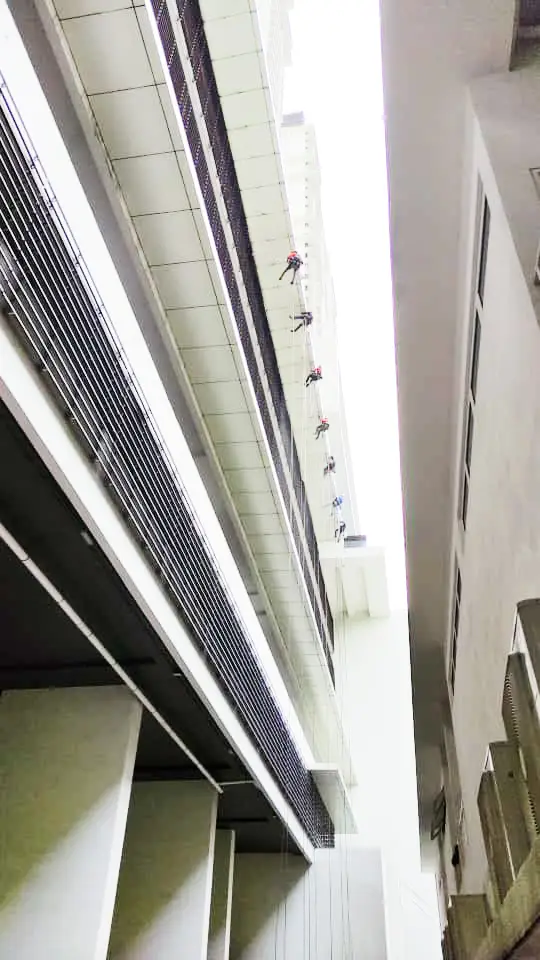
This high-rise window cleaning frequency Malaysia guide gives facility managers, hotels, offices, condominiums, hospitals and property committees a practical way to set and review service intervals.
High-Rise Window Cleaning Frequency Malaysia: Practical Starting Points
| Site condition | Possible starting review | Reason |
|---|---|---|
| Prestige office, hotel or retail frontage | Monthly to quarterly | Appearance standards and public-facing glass may require closer attention |
| Typical urban office or condominium | Quarterly to half-yearly | Balances visible soiling with planned access |
| Lower-exposure or less visible elevations | Half-yearly to annually | May remain acceptable when contamination is limited |
| Coastal, construction or heavy-traffic exposure | Inspect monthly and clean as condition requires | Salt, dust and traffic film can accumulate quickly |
These ranges are planning references, not a specification. Begin with a site inspection and a trial cycle. After two or three services, photographs and complaints data will show whether an elevation should move to a shorter or longer interval.
10 Factors That Change the Cleaning Interval
- Building location: dense commercial districts usually receive more airborne pollution than open suburban sites.
- Traffic: roads, bus routes and loading bays can leave a persistent film on lower and windward elevations.
- Rainfall: rain can move dust rather than remove it, leaving trails below frames and facade projections.
- Humidity: damp sheltered areas may support algae or biological staining.
- Coastal exposure: salt deposits can affect appearance and should be assessed with the glass and frame system in mind.
- Construction activity: dust and splashes can increase rapidly during nearby earthworks or facade projects.
- Glass type: coatings, films, frits and textured glass can require specific methods and show marks differently.
- Building height and shape: wind patterns, setbacks and fins create uneven exposure.
- Trees and birds: pollen, sap and droppings can concentrate on particular floors.
- Tenant requirements: hotels, showrooms and corporate offices may set a higher visual standard than back-of-house areas.
Inspect by Elevation, Not Only by Building
A north-facing facade can age differently from a sun-exposed elevation. Lower floors beside traffic may soil faster than upper floors, while ledges and fins collect residue that open glass sheds. One building-wide interval can therefore over-service clean areas and under-service difficult ones.
A practical high-rise window cleaning frequency Malaysia programme can divide the property into zones. Entrance glass may be cleaned frequently from the ground, podium glazing on a separate cycle and high-level elevations according to inspection. This improves budgeting without lowering the agreed standard.
Signs the Current Schedule Is Too Long
- Streaks and traffic film are clearly visible well before the next service.
- Tenants regularly report dirty glass or blocked views.
- Mineral deposits and bird droppings are left to harden.
- Frames, ledges and drainage paths show repeated residue.
- Cleaning takes progressively longer because contamination has become established.
Do not assume every mark is dirt. Failed insulated glass units, coating damage, scratches and internal condensation will not be corrected by routine exterior cleaning. Record such conditions separately.
Signs the Schedule May Be More Frequent Than Necessary
If inspection photographs show little visible change between visits and tenant standards remain satisfied, consider extending the interval on selected elevations. Make the change gradually and continue monitoring. Avoid cancelling an entire programme because one sheltered area stays clean.
Build a Record That Improves the Programme
Ask the contractor to photograph representative areas before and after cleaning, record access limitations and note unusual staining. Keep dates, weather, complaints and costs by elevation. After a year, the building team will have its own evidence rather than relying on a generic industry interval.
For contractor selection, use the checklist in how to choose a high-rise window cleaning company in Malaysia.
Coordinate Cleaning with Other Exterior Work
Window cleaning may reveal failed sealant, blocked drainage, staining below cracks or loose exterior fittings. When inspection or repair is already planned, combine access where practical. The cleaning team should not make engineering conclusions, but clear photographs can support the next specialist review.
Every interval must still allow for safe planning. Refer to the Department of Occupational Safety and Health’s work-at-height information and require controls suited to the actual building and access method.
Create a First-Year High-Rise Window Baseline
When a building has no reliable cleaning history, avoid locking in a long contract based on guesswork. Start by photographing representative panes on each elevation and recording the condition of frames, ledges and corners. Complete one carefully supervised clean, then check the same locations after four, eight and twelve weeks. The pattern will show whether visible soil returns evenly or concentrates around roads, exhaust points, landscape areas and facade projections.
Use the first year to test the programme. A hotel entrance may justify frequent ground-level work while upper guest-room glass follows a longer cycle. An office tower may schedule its most visible elevations before major tenant events and review sheltered sides later. Record these decisions so a new facility manager can understand why the intervals differ.
Separate High-Rise Window Cleaning from Specialist Stain Removal
Routine window cleaning normally targets dust, traffic film, fingerprints, bird deposits and ordinary water marks. Cement splashes, weld spatter, silicone residue, mineral scale, scratches and coating damage are different conditions. They may need testing, specialist products or replacement advice, and some cannot be removed without risking the glass.
Ask the contractor to identify these conditions during the site assessment and mark them as exclusions or separate items. This avoids repeated complaints about a pane that remains marked after ordinary cleaning. It also protects the glass from aggressive scraping or chemicals used simply to meet an unrealistic promise.
Review the High-Rise Window Contract After Every Cycle
| Review item | Question for the building team |
|---|---|
| Appearance | Did the agreed sample standard remain acceptable until the next planned visit? |
| Access | Were any drops, panes or elevations missed because of anchors, obstacles or occupied areas? |
| Timing | Did the work clash with tenants, deliveries, events or peak hotel operations? |
| Weather | How many shifts were delayed, and did the contingency programme work? |
| Defects | Were failed joints, cracks, drainage issues or damaged glass recorded clearly? |
| Cost | Would zoning or combining suitable access with other work improve value? |
Use this review to adjust the next cycle rather than renewing the same dates automatically. A good high-rise window programme becomes more accurate as the building collects its own evidence.
Reset the High-Rise Window Interval After Construction
Nearby construction, facade repainting, sealant replacement and fit-out work can change the normal level of dust and residue for several months. Inspect the glass before the work starts, protect sensitive areas where practical and agree on a post-work clean that is separate from the routine cycle. Once the temporary contamination has settled, review the building again before deciding whether the earlier interval still makes sense. This prevents a short-term construction problem from becoming an unnecessarily expensive permanent schedule.
Plan High-Rise Window Notices and Weather Contingencies
A workable frequency is not only a number on the calendar. Residents may need to close windows and clear balconies, hotel guests need privacy, and offices may have meetings or events near the glass. Issue notices by elevation and expected date, explain what occupants must do and provide a simple contact route for access problems. A clear notice reduces missed panes and prevents the contractor from returning repeatedly to the same drop.
Every programme also needs spare days. Rain, lightning and wind can interrupt high-level work even when the ground appears calm. Agree on who decides to stop, how the team records an incomplete elevation and when occupants will receive a revised date. When the contract measures progress by completed drops or zones rather than attendance alone, both the building and contractor have a clearer basis for rescheduling and payment.
Frequently Asked Questions
Should high-rise windows be cleaned every month?
Some public-facing glass needs monthly attention, but a full high-rise exterior clean every month is not necessary for every building. Set intervals by exposure, appearance standard and inspection evidence.
Does Malaysian rain clean external windows?
Rain may rinse loose dust, but it can also move pollution and leave streaks or mineral residue. Sheltered sections may receive little useful rinsing.
Do coastal buildings need more frequent cleaning?
They may. Salt and wind exposure vary by distance, orientation and surrounding buildings. Inspect representative elevations and follow any glass or frame maintenance guidance.
Can different elevations have different schedules?
Yes. Zoning is often more practical because traffic, sun, rain, wind and architectural shelter affect each elevation differently.
How can managers justify the cleaning budget?
Use dated photographs, tenant feedback, condition notes and the actual duration of each cycle. These records show how the service protects presentation and supports facade observation.
Request a Site Assessment
Vertical Pro Sdn Bhd can assess external glass access and help building teams establish a condition-based high-rise window cleaning frequency Malaysia programme rather than relying on a fixed generic interval. Review Vertical Pro’s external window cleaning or contact the team to discuss the building, access constraints and intended outcome.
Prepared by Vertical Pro Sdn Bhd for building owners, facility managers, property managers, JMB and MC committees. This article provides general building-maintenance information. The final method, access system and repair or cleaning specification should be confirmed for the actual building and site conditions.