
Professional External Silicone Replacement Services at Menara IIB, Iskandar Puteri
The external façade of a commercial tower is continuously exposed to intense sunlight, heavy rain, humidity and changes in temperature. Over time, these conditions can cause façade sealant to harden, crack, shrink or separate from the surrounding surfaces.
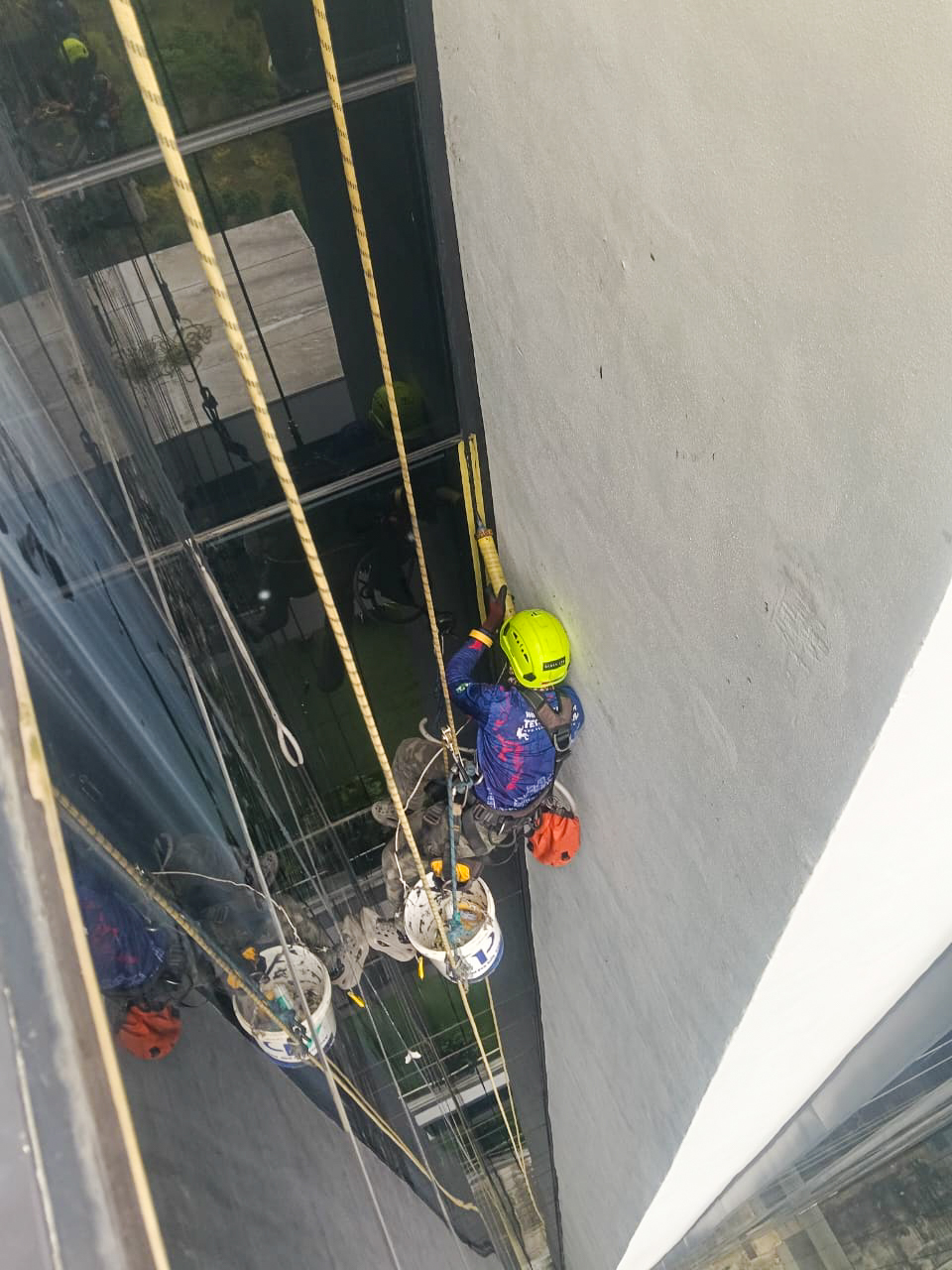
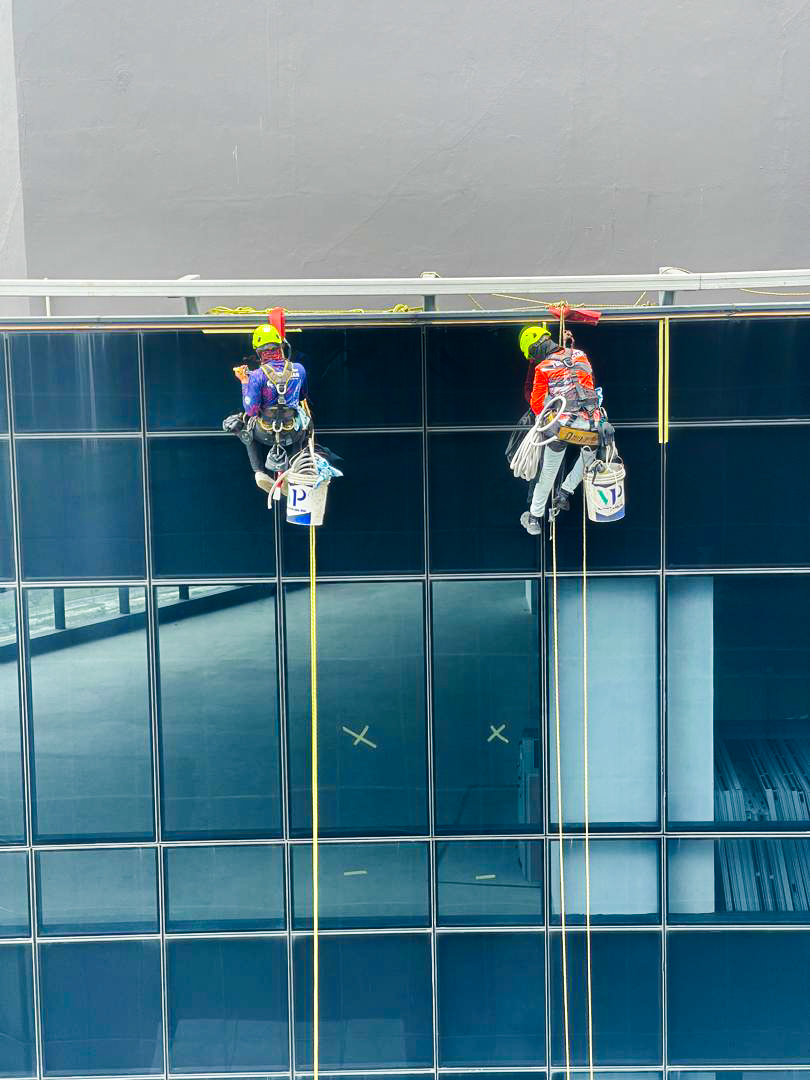
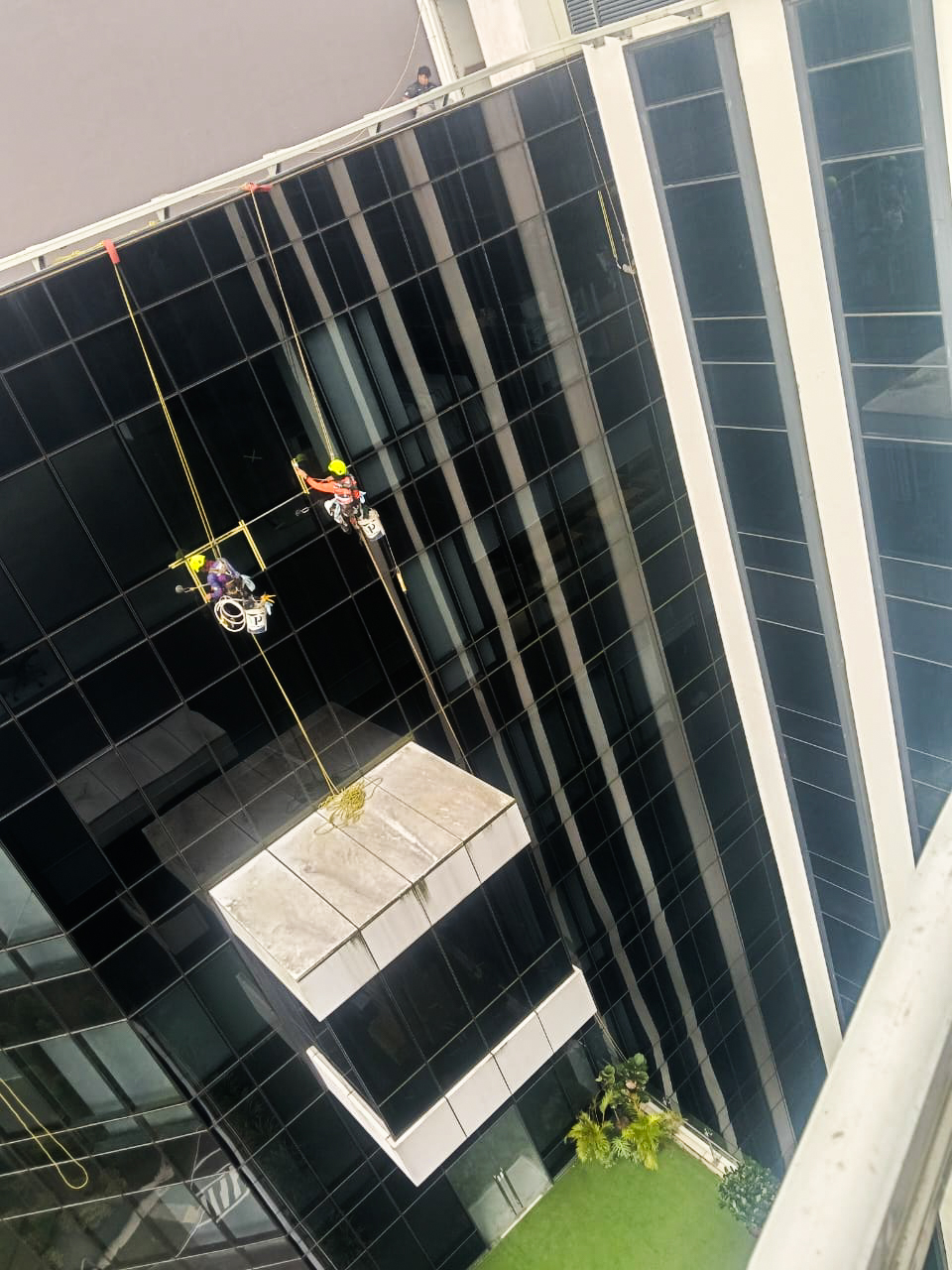
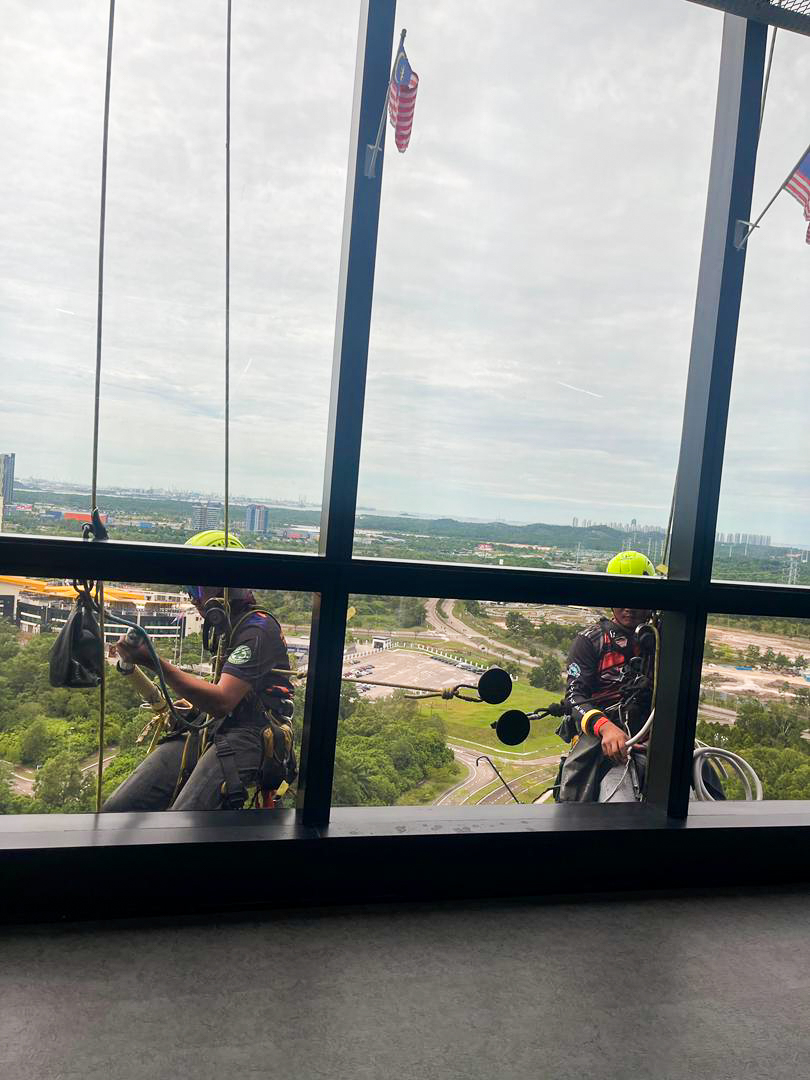
Vertical Pro carried out professional external silicone replacement works at Menara IIB, Iskandar Puteri. The project involved removing deteriorated silicone sealant from designated façade joints and applying new sealant to restore their condition and support the building’s protection against water penetration.
As the affected areas were located on the exterior of a high-rise building, the work required careful preparation, specialised access and technicians experienced in façade sealant application.
Why External Silicone Sealant Is Important
Silicone sealant is commonly installed around glass panels, window frames, cladding systems and façade joints. It forms a flexible barrier between adjoining components and accommodates a certain degree of movement caused by wind, temperature changes and normal building behaviour.
When the sealant remains in good condition, it helps prevent rainwater and moisture from entering the joints. However, prolonged exposure to the environment can gradually reduce its effectiveness.
Common signs of deteriorated external silicone include cracking, splitting, peeling, loss of elasticity and separation from the joint edges. Gaps may also appear where the sealant has shrunk or lost adhesion. If these defects are left untreated, rainwater may penetrate the façade and contribute to internal staining, dampness or damage to nearby finishes.
Timely replacement helps restore the sealed joints and supports the building’s preventive maintenance programme.
Assessment of the Existing Façade Joints
Before commencing the replacement work, our team assessed the designated sections of the Menara IIB façade. The condition of the existing silicone, joint configuration, surrounding materials and accessibility of each work area were considered.
This assessment helped determine the suitable removal and application process. Areas requiring attention were identified and organised into a systematic working sequence.
It was important to distinguish between visibly deteriorated sealant and surrounding façade components that might require separate inspection or repair. Silicone replacement can improve the condition of failed joints, but other sources of water penetration may need additional investigation.
Removal of Old and Deteriorated Silicone
Proper surface preparation is critical to the performance of newly applied silicone. Applying fresh sealant directly over old or damaged material may result in poor adhesion and an uneven finish.
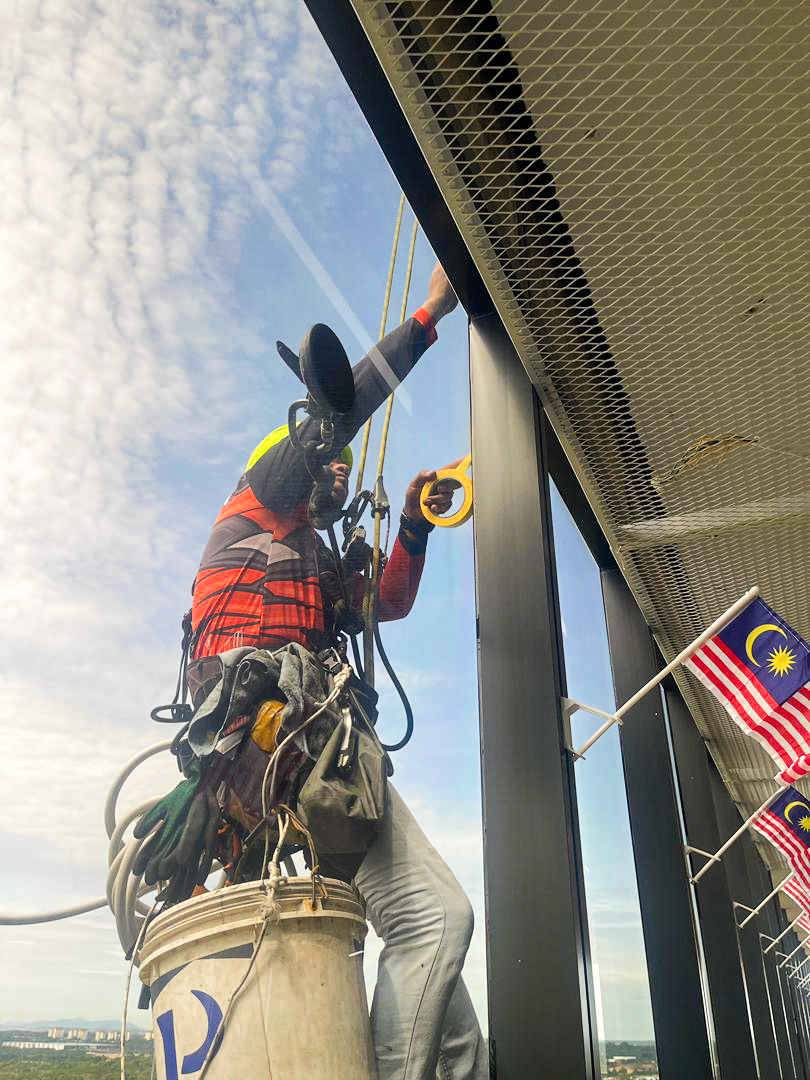
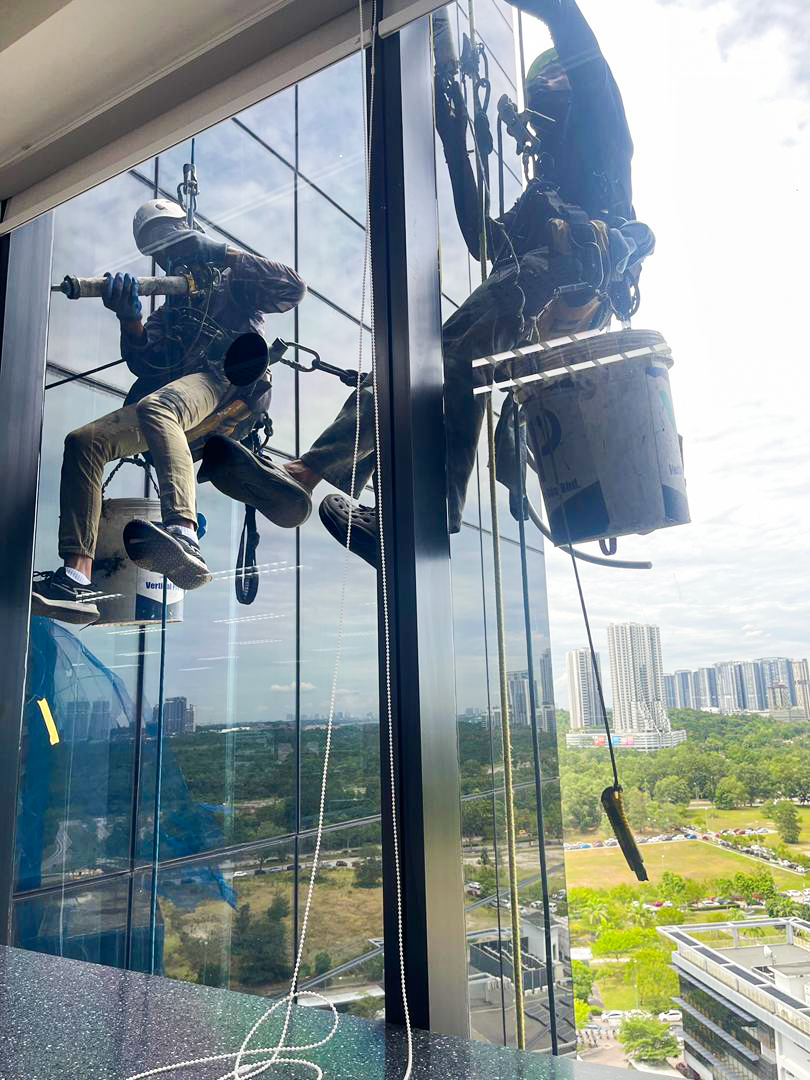
Our technicians carefully removed the deteriorated silicone from the designated façade joints. Remaining residue and loose material were cleared from the joint surfaces to prepare a suitable base for the replacement sealant.
Care was taken during removal to avoid unnecessary damage to the glass, frames, cladding and adjacent finishes. The prepared joints were checked before the new silicone was installed.
Where required, the joint condition and configuration were addressed according to the agreed work method. This preparation supported better adhesion and allowed the new sealant to form a neat, continuous line.
Application of New External Silicone Sealant
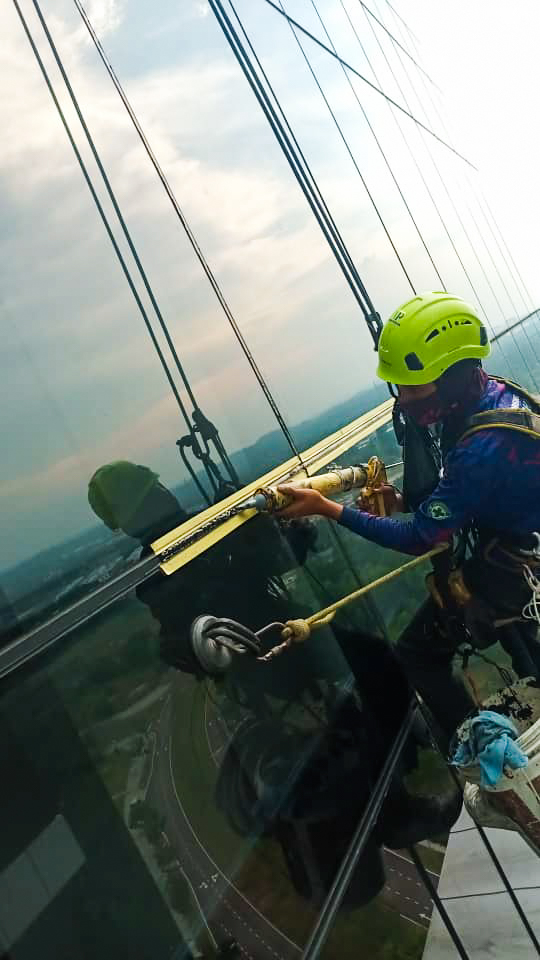
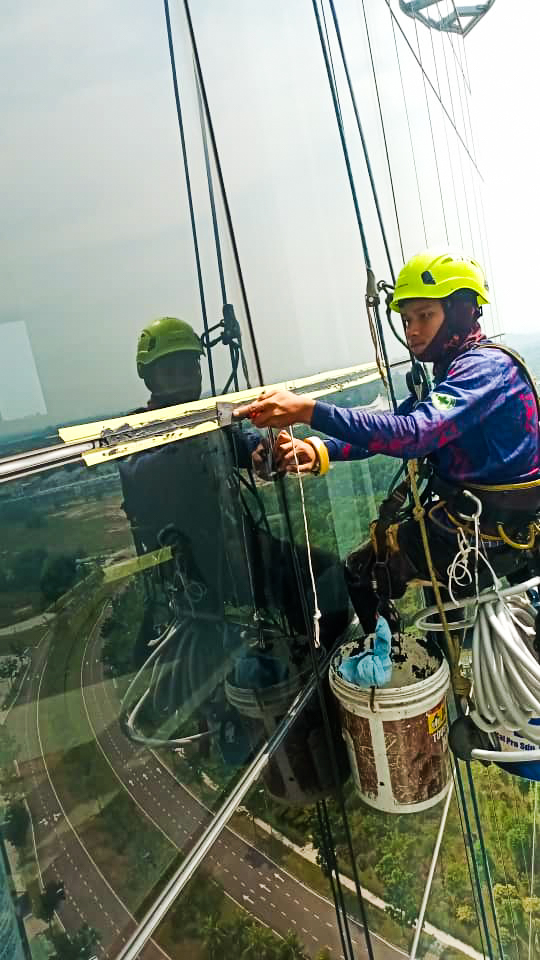
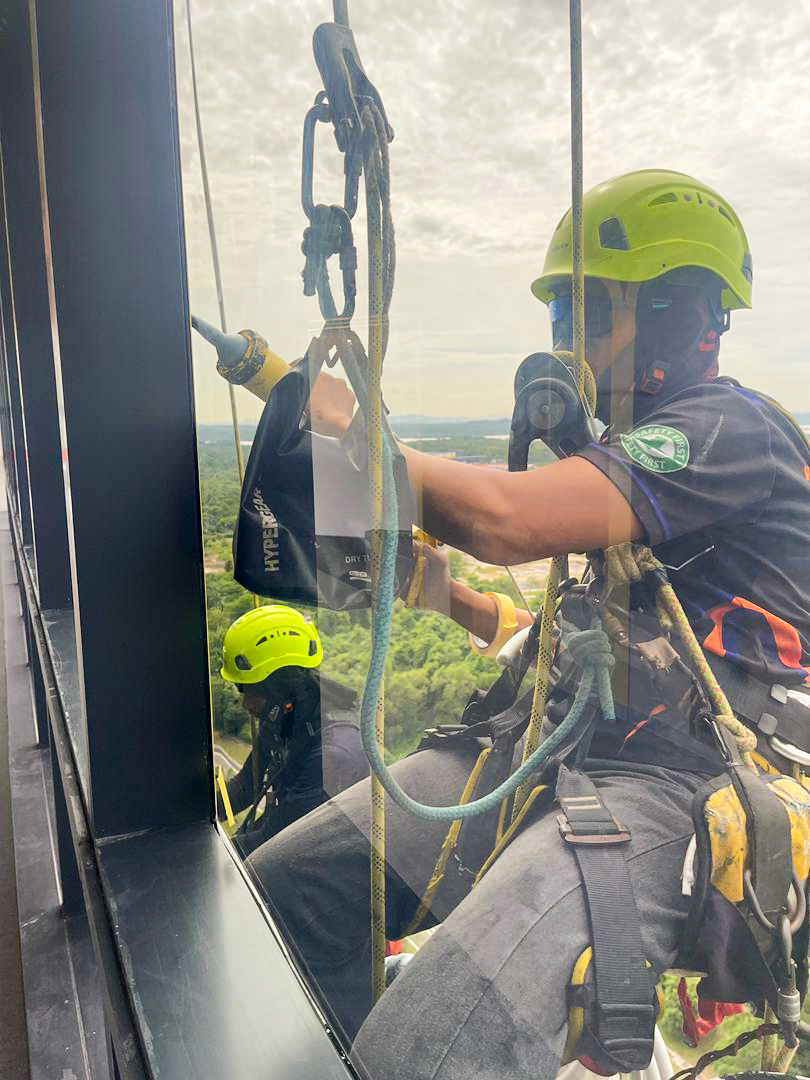
Once the joints had been cleaned and prepared, new suitable external-grade silicone sealant was applied. The material was installed evenly along the designated joints, ensuring appropriate contact with the adjoining surfaces.
The freshly applied silicone was tooled to produce a consistent finish and support effective joint coverage. Each completed section was visually inspected for gaps, discontinuity or irregular application before the team progressed to the next work area.
Environmental conditions were also considered during application. Rain, excessive moisture and unsuitable surface conditions can affect sealant installation and curing. Work was therefore planned around appropriate weather conditions wherever possible.
Specialised Rope-Access Operations
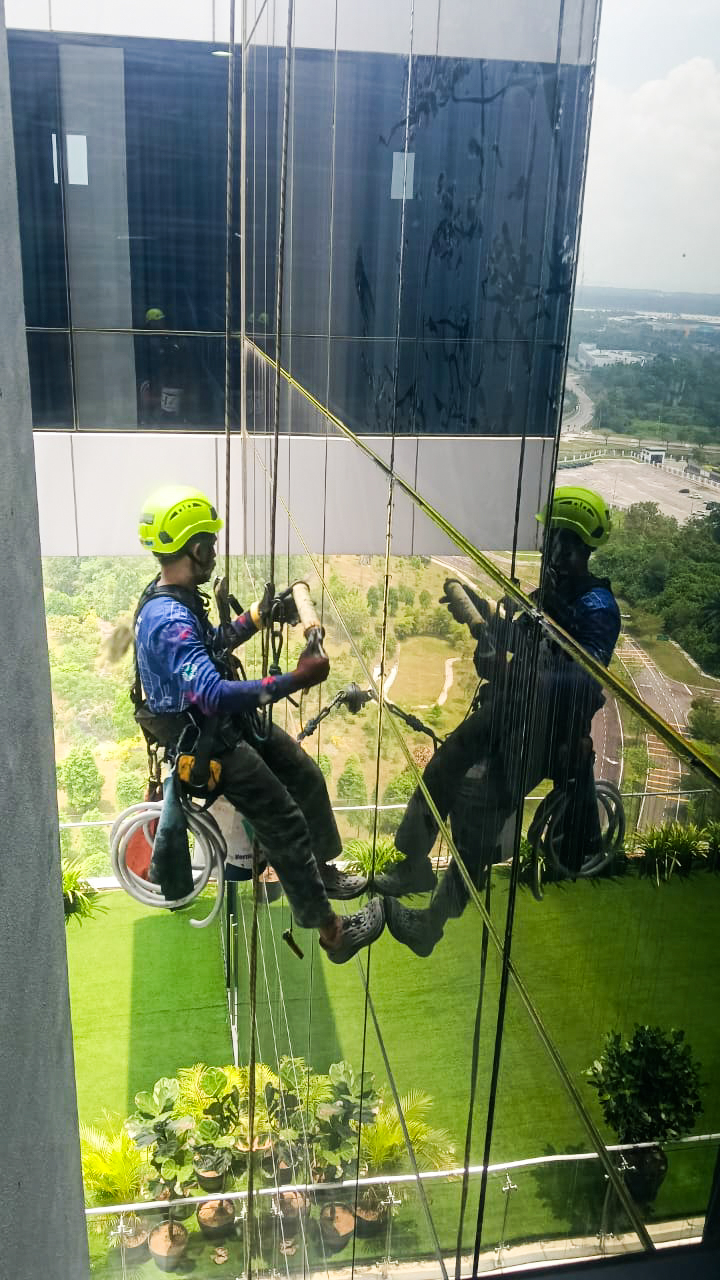
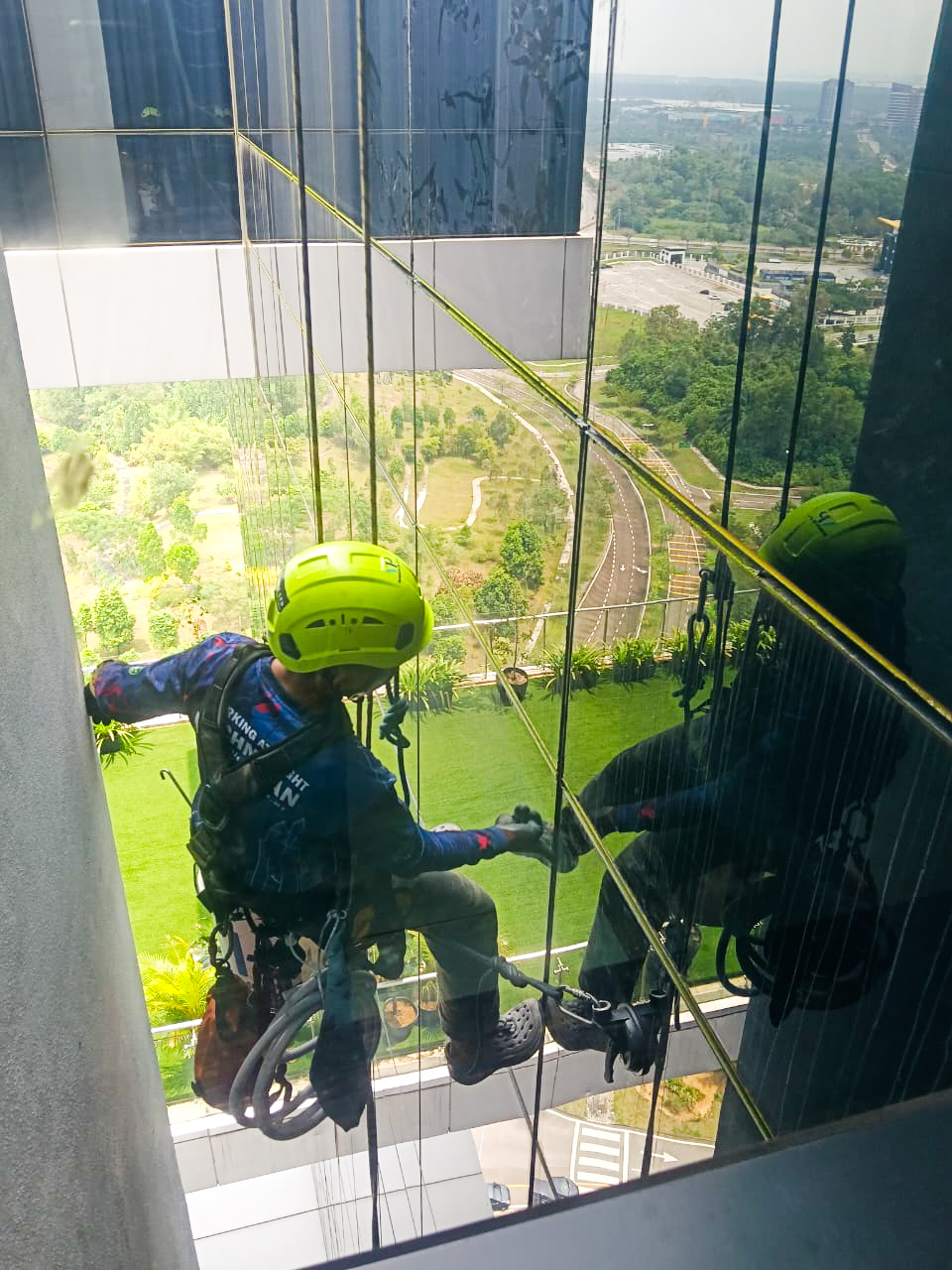
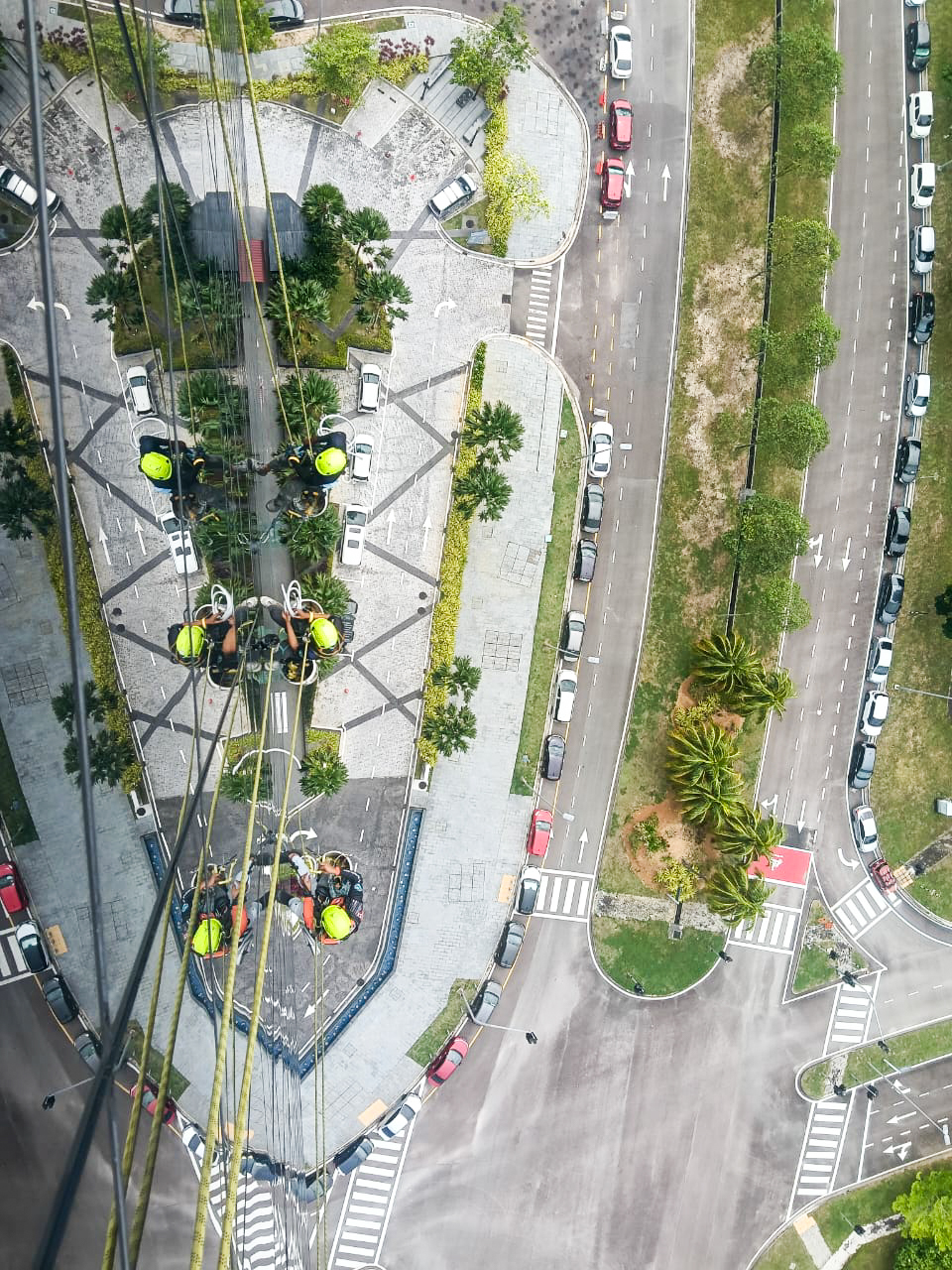
Many of the affected façade joints at Menara IIB were located in elevated areas that could not be reached easily using conventional methods. Specialised rope access provided an efficient way for trained technicians to reach these locations while minimising the need for large scaffolding structures.
Before work began, suitable access positions and rope systems were established. Harnesses, connectors, ropes and other personal protective equipment were inspected, while tools and sealant materials were secured to reduce the risk of dropped objects.
Controlled zones were implemented below active work locations where necessary. Weather conditions, particularly rain and strong winds, were monitored throughout the project to support safe work-at-height operations.
Supporting Long-Term Façade Performance
External silicone replacement helps maintain the integrity of façade joints and reduces the risk of water entering through deteriorated sealant lines. It can also improve the exterior’s appearance by replacing cracked, uneven or discoloured silicone with a cleaner finish.
The works at Menara IIB demonstrate Vertical Pro’s capabilities in high-rise sealant replacement, façade waterproofing support and rope-access maintenance.
Vertical Pro provides professional external silicone replacement services for commercial towers, hotels, residential developments and institutional buildings. Contact us today to arrange a façade assessment and request a customised quotation.